
sundry disappointments
a media update from May. steer clear if you can't stand spoilers of any kind.

Can it be a series if the newsletters aren’t titled the same?
That’s it, that’s the intro.
laugh, cry, fall asleep

I’d like to say this is the first of a series, but I’m notoriously capricious with that kind of thing. So let’s just do this first one and see what happens, k?
previous things
Permit me to briefly circle back to some of the things from the first installment of this series of media roundups.
First, The Other Bennet Sister. I signed up for the 7-day Britbox trial and binge-watched the first five episodes. Mind you, I’d seen many a preview of this series via YouTube shorts, and the charm of the characters in those videos is what inspired me to read the source material to begin with. But after watching the first half of the TV series, I’m not totally sure that I’ll pay for the privilege to see the rest of the season. Why not? Well, if the book disappointed me because it read like Jane Austen fan fiction, then the TV series doubly disappointed me by seeming like a fan fiction based on that fan fiction—fan service, pretty much.
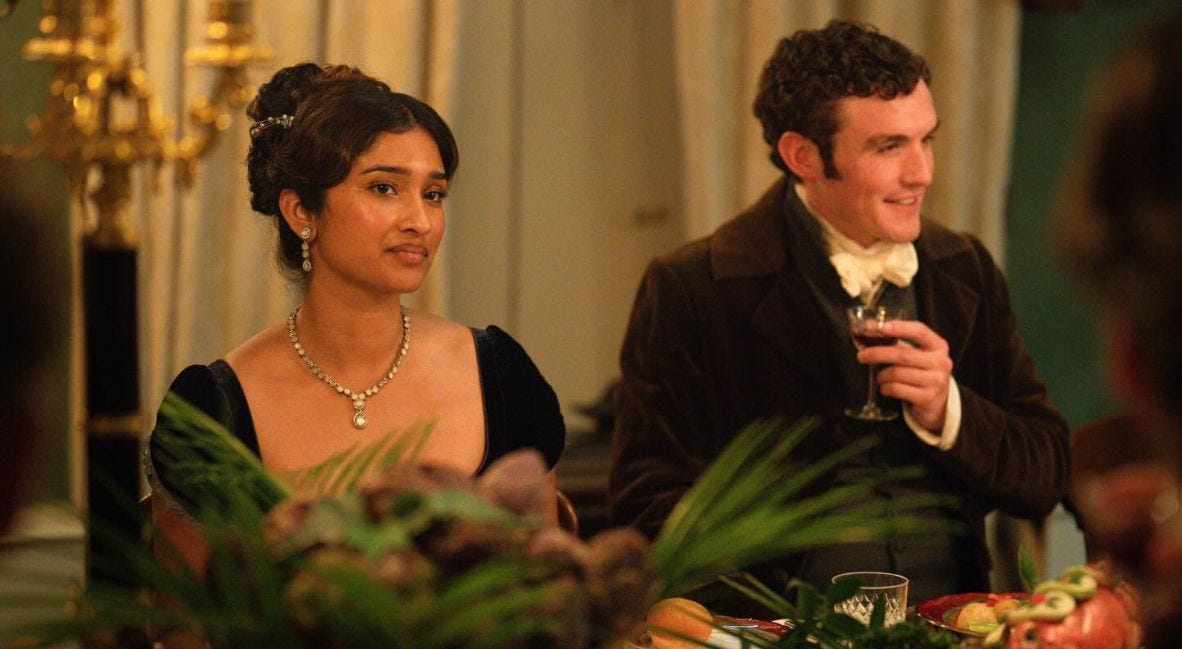
I’m frankly surprised that BBC fumbled it, because they’ve put out some really good Austen adaptations in the past. I think where they went wrong is that they excised the most interesting parts of the book, the bits that made the premise of the story seen from Mary’s point of view compelling in the first place. So Mr. Bennet dies, leaving Mary the only unmarried daughter in the family, and because of her social standing, all she can really do is prevail upon her relatives until she finds a husband (or worse, an occupation) for herself. In the book, Mary lives in turns with the Bingleys, the Darcys, and the Collinses before she goes to London to stay with the Gardners. A lot happens in that post-Longbourn/pre-London time; in fact, I’d say that Mary’s character development hinges on what happens between Mary and Elizabeth and later, Mary and the Collinses. By leaving those parts out (and ret-conning their way into Mary’s happy ending with Mr. Hayward), the TV show has effectively made fluff out of Austen. Boo!
(Does me downing on it kinda make you wanna watch it? It’s cool if it does.)
Just one more reference to previous things: I’m still working on the two Murakami books, but I did finish Ocean Vuong’s The Emperor of Gladness.1
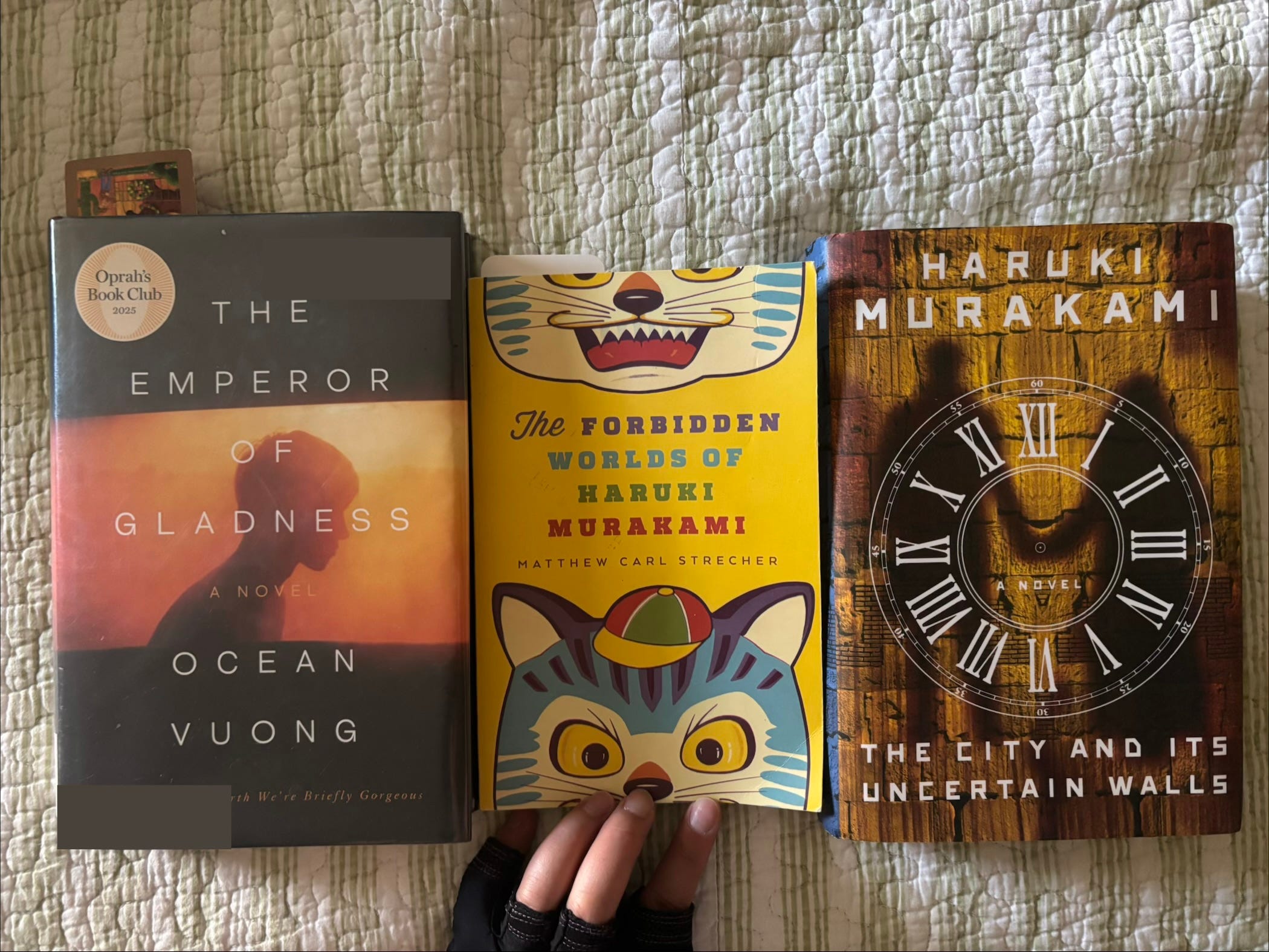
The internet really is full of haters, because I’d made assumptions about Vuong’s writing based on some social media criticism that hit my feed, but I genuinely found this novel an enjoyable read. This might sound big-headed, but Vuong’s writing kind of reminded me of my own, particularly the way he painted the landscape lyrical, the words colored by the unlikely love I too feel about the place where I grew up as an immigrant child. But of course, Vuong’s a way better writer than me—here’s one of the passages I earmarked, because it reminded me of the weird Filipino names I found funny, lacking understanding of my own culture:
“Sony was named after the Sony Trinitron, the first TV his father bought once he arrived in America after being released from a reeducation camp back in Vietnam… Naming your child after electronic devices was not uncommon among people in refugee camps back then. Hai knew a kid in Windsor named Toshiba (which got him mistaken for Japanese). Aspirational names didn’t stop at electronics either, but extended to any cultural relic possessing social or monetary value. One of his mother’s coworkers named her daughter Simba because she had watched The Lion King on repeat while she was pregnant… Another was named BMW. One kid from the same refugee camp as Hai’s family was called MJKarlMalone Truong; rivals in life, Jordan and Malone would be united in the body of an asthmatic Vietnamese boy with a lazy eye who landed, of all places, in North Carolina, home of Jordan’s Tar Heels. Their elders named them after whatever they hoped would manifest in life. Why toil away in factories to save for a Lexus when you could make her yourself?”
—Ocean Vuong, The Emperor of Gladness
I particularly appreciated the way that Vuong handled the story and its characters: with tenderness and affection, and yet pulling no punches with the bluntness of reality. The story even explored the idea of a found family among coworkers turned unlikely friends, something I touched on in this previous newsletter:

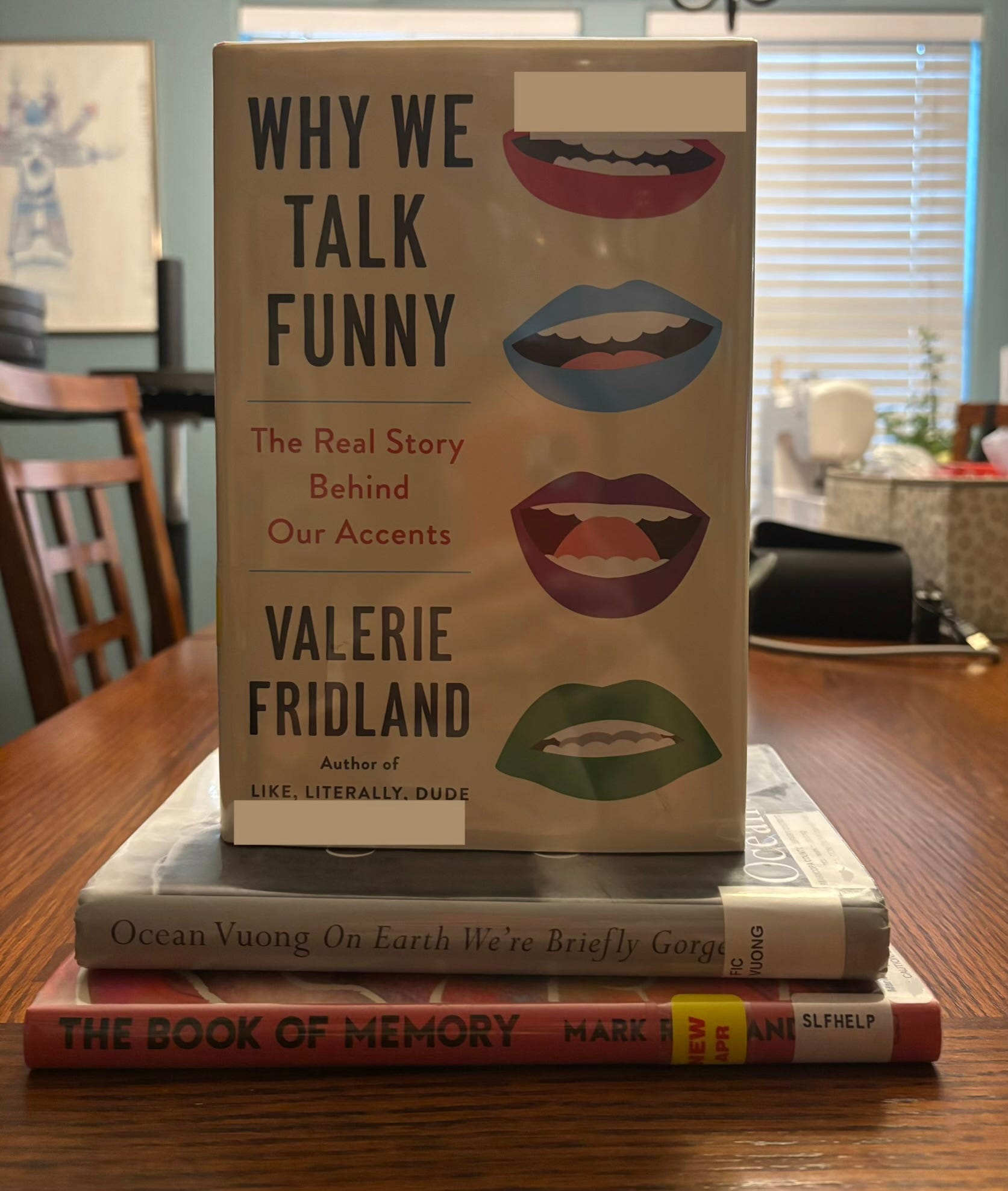
No neat, happy endings, just like I like it. Enough to check out his debut novel, On Earth We’re Briefly Gorgeous, from the library.
finished things
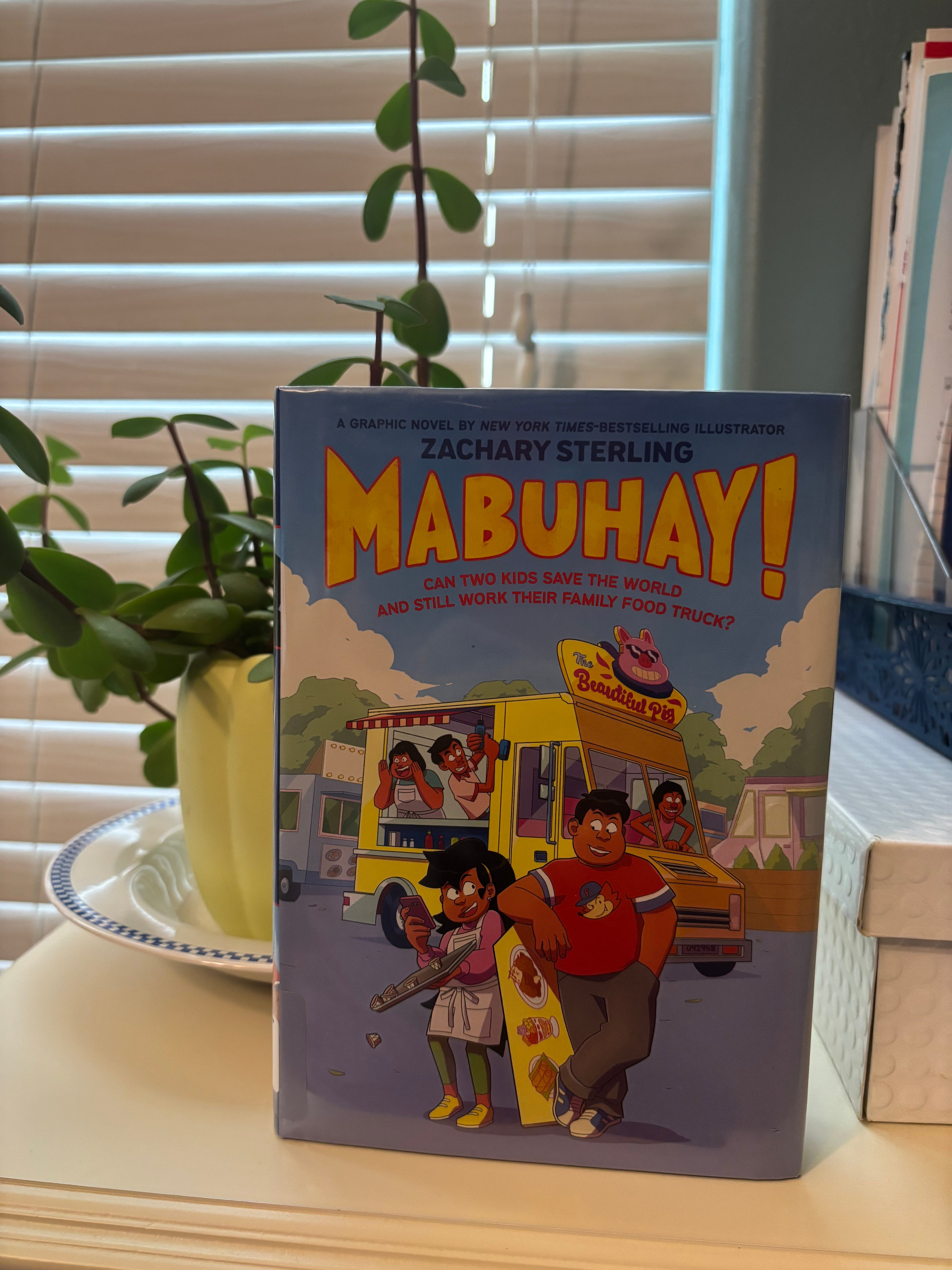
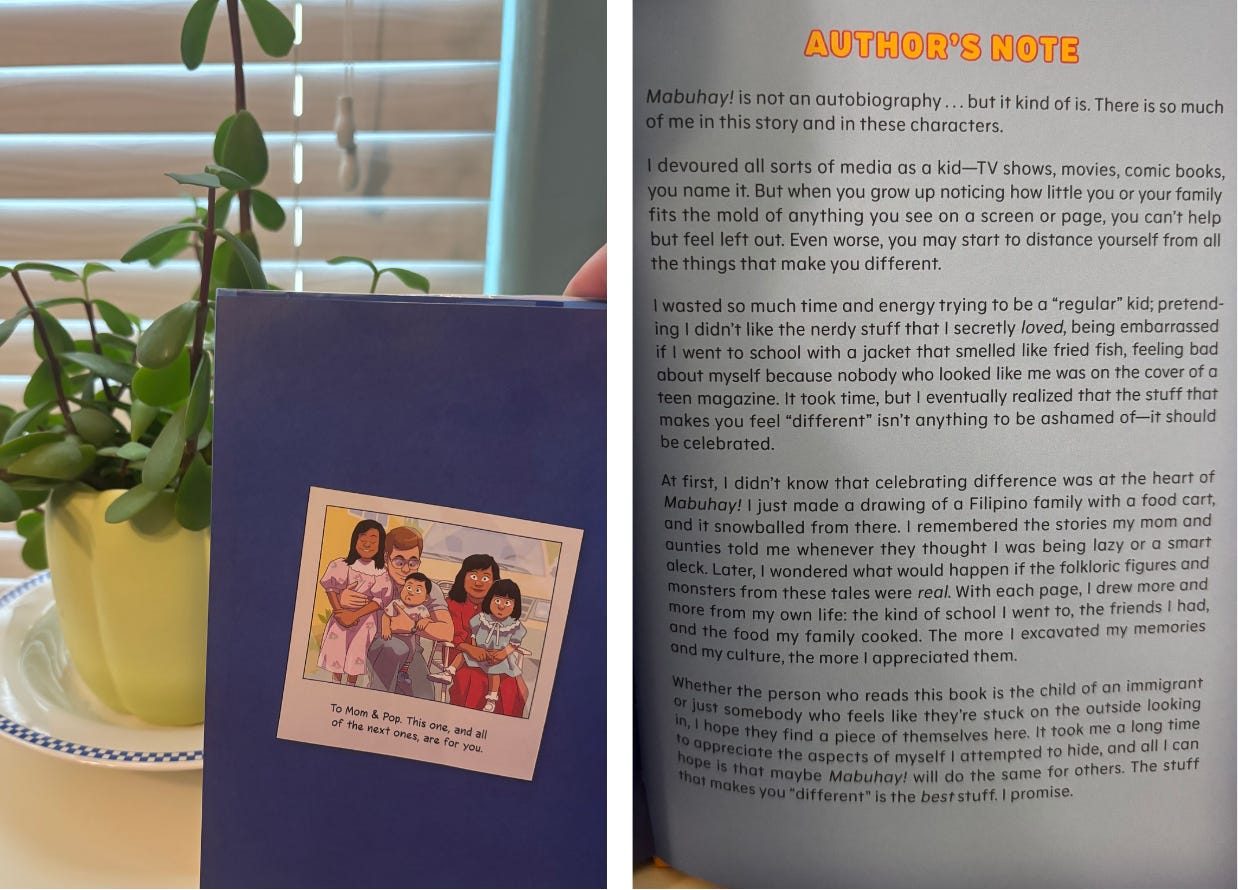
Speaking of southeast Asian origins, I read a juvenile graphic novel called Mabuhay!, by Zachary Sterling.2 It’s about a brother and sister, both in high school, living in the suburbs somewhere in the U.S. (can’t remember which state, refuse to google it) with their parents, who run a Filipino food truck. They’re both juggling the social challenges of young adulthood, but the story also incorporates their heritage and the broad and universally relatable idea of figuring out who you are and feeling secure enough in it to hold it with pride. I can definitely relate to the experience of minimizing parts of yourself to fit in; in fact, this experience spanning all the way back into childhood is one that I continue to grapple with as an adult, perhaps even more so as my son gets older and feels more pointedly the social pressures of… well, I guess life.
And if I can be honest here, I was hoping the book would be an opportunity for me to better acquaint my son to the part of his heritage that comes from me. Unfortunately, I myself feel so very “third culture kid”—more than anything, in fact, I simply feel American, not very well-versed in Filipino history or culture. So I appreciate that this book put some Filipino words, dishes, and customs in my child’s sightline; here’s hoping that I can, in my own imperfect but earnest way, continue to nurture his natural curiosity about the Philippines, so maybe we can both learn about that part of ourselves.
I watched a handful of movies in the past six weeks, too.
I did watch Obsession in theaters, but I wrote about that here:

I watched David Fincher’s Zodiac, starring Jake Gyllenhaal, for my monthly cinema club.3 I didn’t have strong feelings about the movie, though it did give me the excuse to watch some David Fincher-directed music videos.
The other thing I watched—and the movie I enjoyed the most over the past month—was La chimera (2023), directed by Alice Rohrwacher and starring the ever-compelling Josh O’Connor. I’ve seen it recommended by Blackbird Spyplane more than once, and when I forwarded their latest, Josh O’Connor-related newsletter to ET, the movie received another hearty commendation. I had it in mind to watch Rosemead or Uncut Gems (of which I’ve only seen memes) on Kanopy this weekend, but La chimera cut the line, and I’m grateful for it.
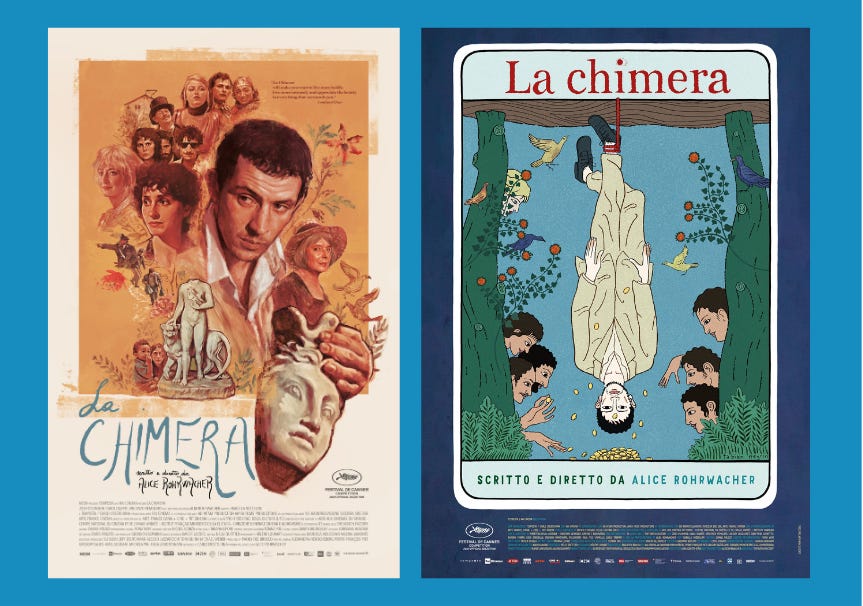
Sometimes when I watch a movie, I like to mine my memory for something I’d double feature it with, as if I’m running an imaginary independent movie theater. For La chimera, I considered Call Me By Your Name (dir. Luca Guadagnino, 2017), probably because of the throughline of unearthing ancient artifacts in Italy, but maybe just because Timothee Chalamet happened to be front of mind, with all the recent courtside carrying-on. But thematically, I don’t think there are enough similarities between the two for such a pairing to satisfy my nonexistent clientele.
Perhaps it’s too pat, but ultimately, I think I would double feature La chimera with Guadagnino’s Challengers (2024) instead, for a few reasons. The first is the score: while La chimera features folklore storytelling by song (and I loved those scenes), it also had some bumpin’ tracks à la Atticus Ross and Trent Reznor’s work for Challengers. The second is Josh O’Connor himself, and the third is the character he’s tasked to portray; in both movies, O’Connor depicts a man who’s rumpled and down on his luck but still driven and undeniably magnetic to the other characters in his orbit. In one, he’s living out of his car and the hotel rooms of charmed strangers, and in the other, he’s shivering in a shack made of corrugated metal sheeting but otherwise doted on by charmed acquaintances. In both, he’s hung up on a past relationship that he probably ought to move on from. And one film is a modern take on the myth of Orpheus and Eurydice, while the other, some have argued, could stand as an “intricate retelling of Shakespeare’s Macbeth.” The similarities seem uncanny, but the two movies are obviously quite different—and I kinda think that’s what makes a good double feature.
This movie is currently streaming on Kanopy; my library card gives me access to this service, and it may be worth checking if yours does too.
planned things
Let’s talk physical media. I did listen to all the records I picked out in April, but the one of country covers recorded by professional rodeo cowboys turned out to be horribly warped and unplayable. I cycled in a new stack of records for June, and although our record player was briefly out of commission with a broken needle, I’ve managed to play a few of them already.
I’ve been listening to the latest release from Josiah and the Bonnevilles on repeat since my copy came in the mail, so I decided to include that album, As Is, as well as his 2023 release, Endurance. I don’t know what it is—in fact, I tried to write about it to get to the bottom of it, but it didn’t go—but I find myself preternaturally drawn to this brand of blue collar melancholy. There’s just something about “I work with my hands all day, and then I play this guitar and sing sad songs all night” that lights my brain up like a neon Budweiser sign.
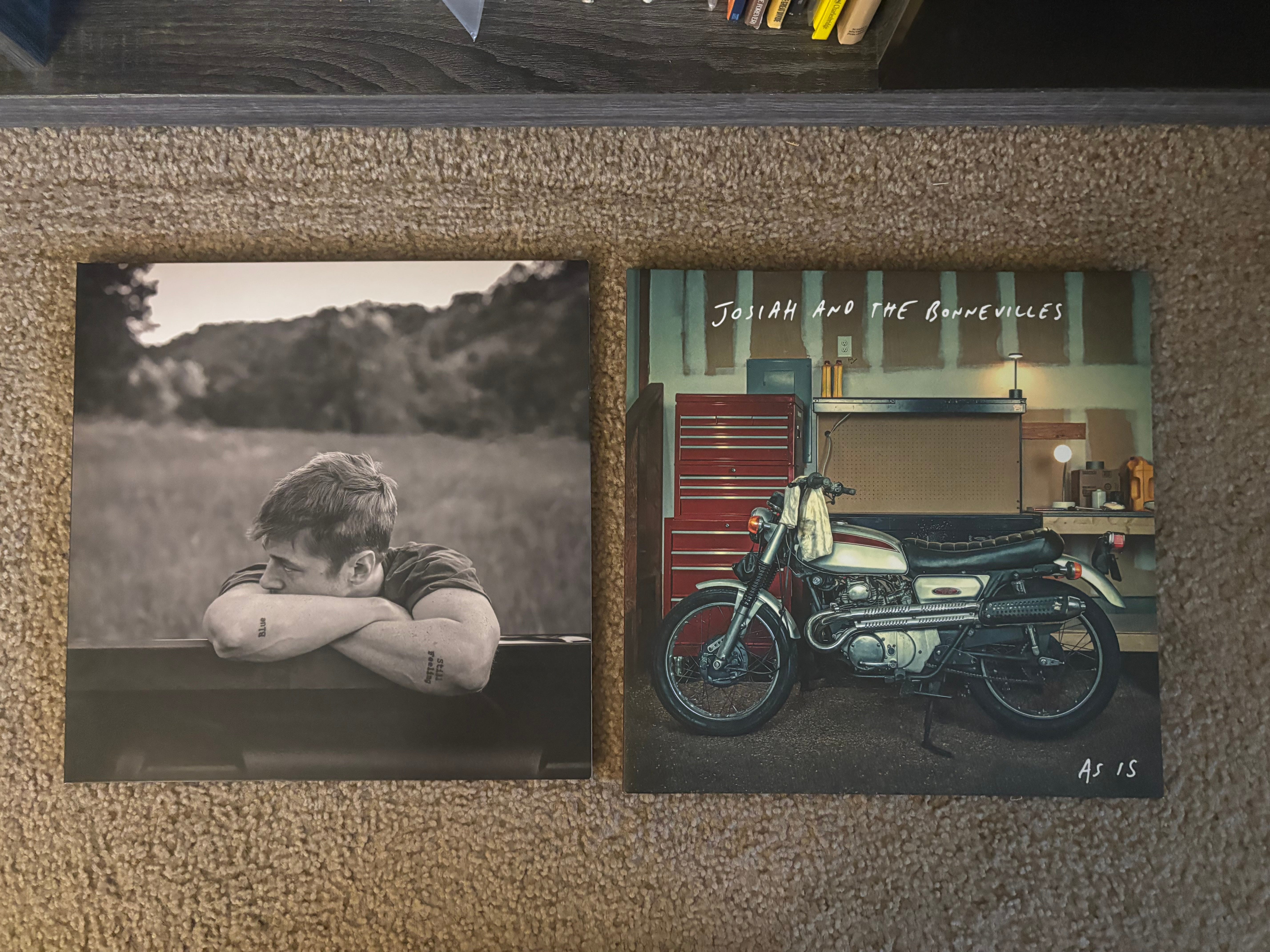
And since it’s my kid’s first month on summer break, I figured he’d find my Josiah pulls palatable; he particularly likes this track, which he calls “Beep Without the Flames” because we handed down the rules set by his grandma, my husband’s mother: no cursing allowed until you have hair on your balls.
Since life’s satisfaction is often a question of balance, I threw in a couple of disco records too. What could be more different from a calloused country boy than a silky-smooth disco diva? I have to admit, though, that I was disappointed to find that Wild Cherry is actually a group of men, the white boys who sang “Play That Funky Music.”
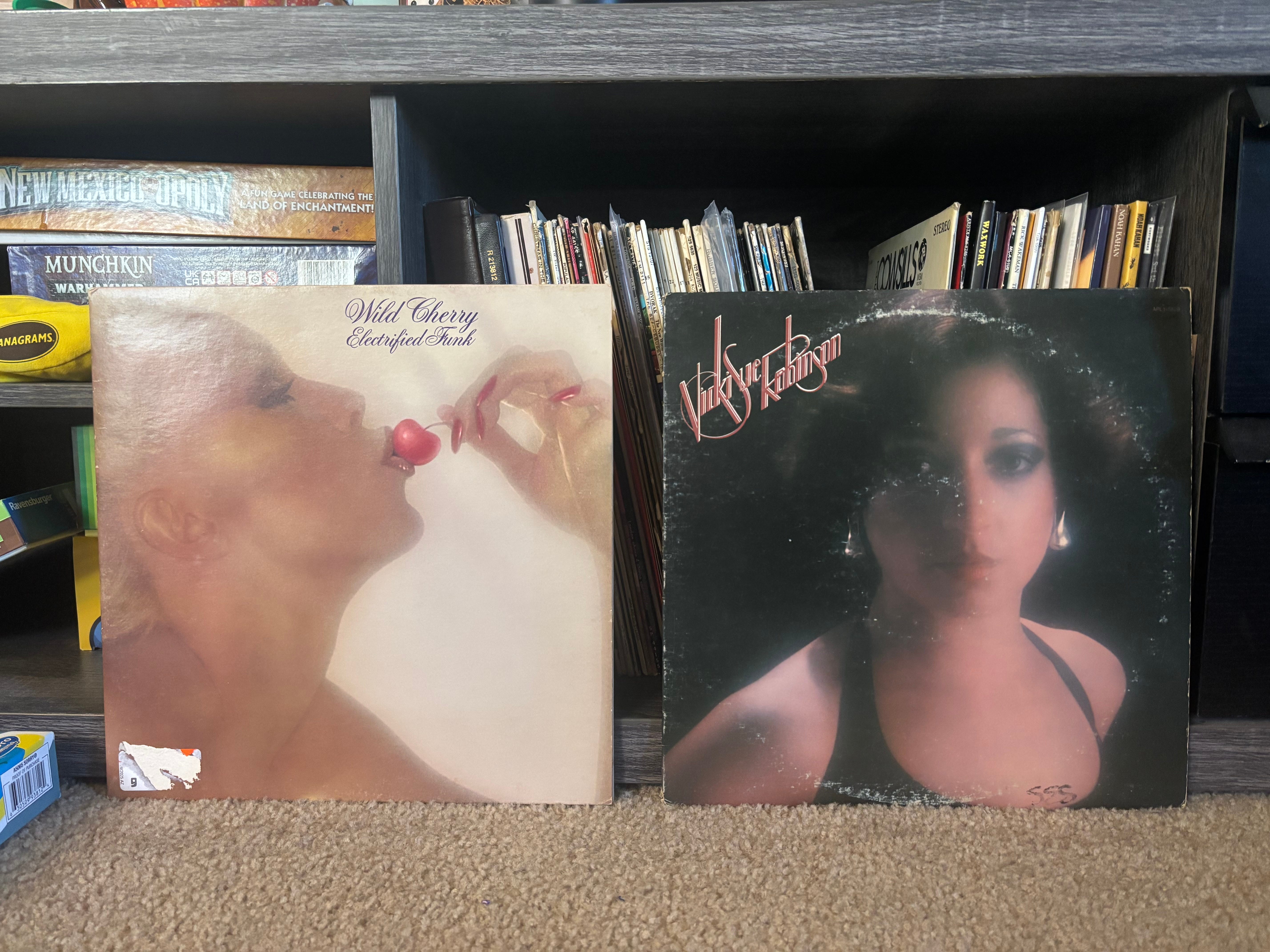
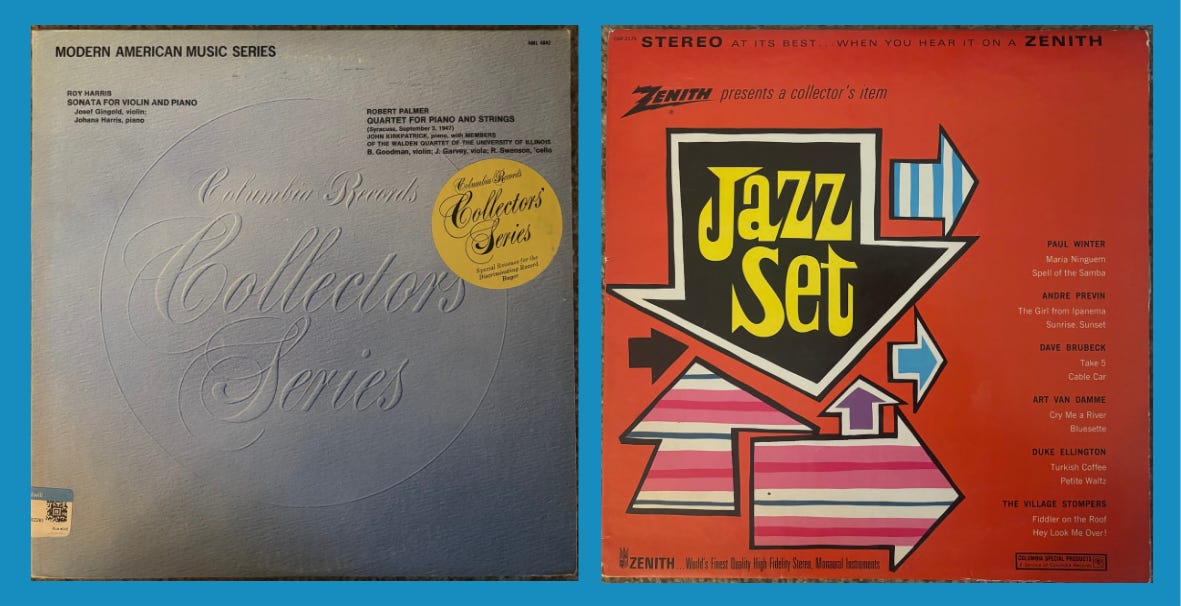
To round it out, I picked a couple of thrifted records I haven’t yet given a single solitary spin. The jazz one on the right felt like a good companion piece to the Murakami, given his well-documented appreciation for the genre. I’ve played this one now a handful of times, and Side A is perfection, especially the pieces recorded by Paul Winter and Dave Brubeck—“Take 5” is never a miss, honestly.
The month’s halfway gone, so a third installment of this series may be delayed (or may never come, who knows). And now that the hockey season has wrapped up, and I don’t follow soccer or tennis, maybe I’ll have more free time for watching and listening, reading and writing.
But no, let me be honest with myself, and you: the rest of June will be about the pool and the pool house.

What I will say about the Murakami: reading Strecher’s Forbidden Worlds is like a cheat code to reading Uncertain Walls. It took forever to get through the first hundred pages or so of Uncertain this second time around because every other line read like a clue, and now, as I’ve gotten about 250 pages into the book, it almost seems like Murakami himself read Forbidden Worlds in order to write Uncertain Walls! (Surely he didn’t—I just mean this to say that Strecher was bang-on in his analysis of Murakami’s themes.)
Mabuhay! is a Filipino greeting that literally translates to “long live”—very similar to sayings like “pura vida” in Costa Rica or “aloha” in Hawaii, that kind of thing. The book does a good job of using but also denoting Filipino phrases and including pronunciations and definitions.
Also starring RDJ, Dermot Mulroney (not hot in this movie but who I will forever hold in my heart as brutally hot), Chloe Sevigny, and Mark Ruffalo. A lot of recognizable faces, which sometimes takes me out of it.
Thank you for giving me more books to add to my TBR list, Ocean Vuong sounds right up my alley from that excerpt. I love your writing and can see the similarities.
So many gems here Angela, loved reading your takes! I’ve added Ocean Vuong to my list and now it becomes top of the list! La chimera sounds very interesting also, I love that you’re in a movie club!!!